 Skip to content
You spend winters dreaming of summer barbecues, only to sacrifice spring weekends to power washing and staining. Industry data reveals this annual “maintenance tax” costs homeowners countless hours and thousands of dollars over a decade. Just as a wooden cutting board warps in the dishwasher while a metal baking sheet survives, organic wood inevitably degrades.
Because aluminum deck flooring possesses biological inertia, it simply isn’t food for mold or insects to consume. Instead of treating your patio like a second job, you get your time back. Over a 30-year lifespan, this premium upgrade proves to be a lasting, cost-effective solution for your home.
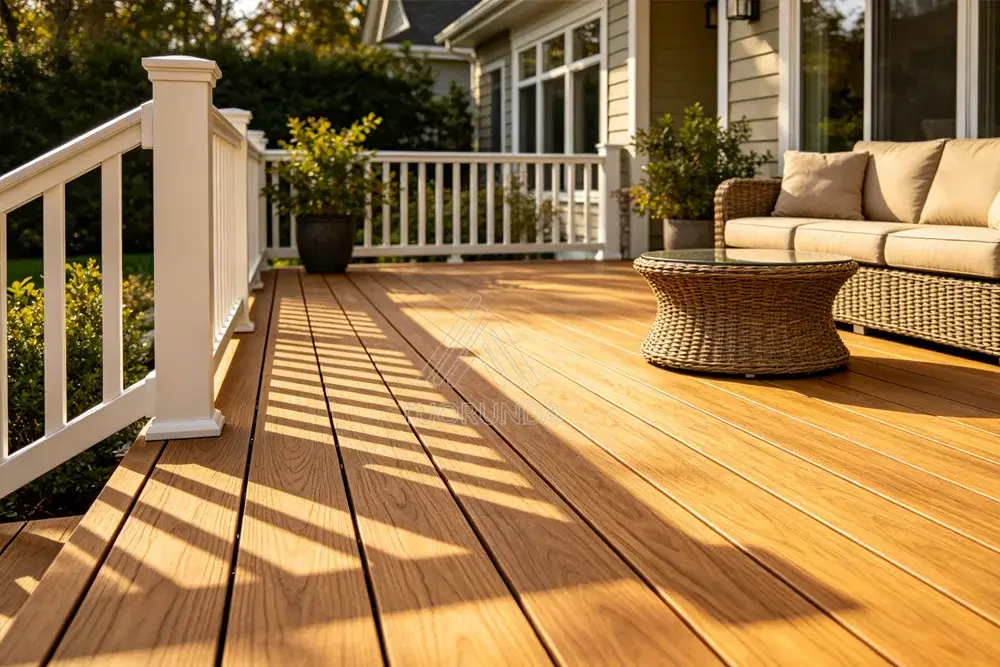
The Real Cost of ‘Cheap’ Wood: Why Aluminum Wins the Long Game
You likely know your monthly mortgage, but have you budgeted for backyard upkeep? While a wood deck seems like a bargain today, the Total Cost of Ownership (TCO) tells a different story over its lifespan. Comparing wood to the upfront aluminum deck boards price is like buying a cheap printer; initial savings are quickly eaten by the endless cost of ink.
A 20-year financial comparison of wood’s upkeep to a one-time aluminum decking price reveals a clear contrast. A traditional deck’s financial drain includes:
- Initial materials and installation costs.
- Gallons of stain and sealer applied every three years.
- Your unpaid weekend labor or expensive contractor fees.
- Eventual complete replacement costs when the organic wood decays.
By year seven, you hit a break-even point where maintaining wood surpasses the cost of premium aluminum decking boards. Down the road, metal delivers a final financial perk: 100% material recyclability. Unlike rotting wood, metal retains actual scrap value while heavily boosting your home’s resale appeal.

The Barefoot Test: Debunking the ‘Frying Pan’ Myth
Picture walking barefoot across a metal floor in July; you probably imagine a frying pan. So, is aluminum decking hotter than wood? Surprisingly, no. Aluminum acts like a high-efficiency radiator, utilizing rapid thermal dissipation. It releases heat into the air instantly instead of trapping it like a dense brick.
To understand the barefoot experience, here is how quickly deck materials shed heat, from fastest to slowest:
- Aluminum: Cools instantly when shaded.
- Wood: Moderate heat retention.
- PVC: Heats quickly, holding warmth.
- Composite: Dense plastics trap heat for hours.
Thanks to rapid cooling, modern aluminum deck systems consistently outperform dark composites in summer touch tests.
Beyond the metal’s core, the surface finish matters. The secret to powder-coated aluminum finish durability is a baked-on, UV-resistant layer that actively reflects sunlight rather than absorbing it. This coating ensures your floor stays entirely safe for kids and pets.
Dry Space Below: Using Interlocking Aluminum for Two-Story Living
Second-story decks often leave the ground beneath as a damp, unusable drip zone. By upgrading to waterproof aluminum decking, you instantly double your usable outdoor footprint. Rather than letting rain slip through the cracks, interlocking aluminum decking features a hidden gutter system built directly into the board edges, naturally forming a solid, leak-proof barrier as the floor is assembled.
Transforming that previously soggy ground into a guaranteed dry space opens major possibilities for your backyard. A watertight aluminum decking ceiling above means you gain:
- Protected patio: Host dinners outside even during a summer rainstorm.
- Extra storage: Safely stow lawnmowers or cushions without buying a shed.
- Increased property square footage: Create a high-value, all-weather extension of your home.
This continuous seal also protects your home’s actual structure. Traditional floors let moisture pool against the ledger board—the critical piece attaching the deck to your house—which invites expensive rot. Because aluminum decking planks actively channel water away, your home’s framing stays dry.

Safety and Strength: Why Metal Decks Outperform in Wildfire Zones
Living where summer breezes carry ember threats makes your building materials a critical line of defense. Unlike lumber that eventually dries out and acts as kindling, aluminum holds a non-combustible rating. This means the material simply will not catch fire. Choosing fire-resistant decking for wildfire-prone areas often secures a Class A fire rating for your home exterior, providing serious peace of mind while potentially lowering your homeowner’s insurance premiums.
Beyond extreme heat, this metal stands as the gold standard for oceanfront properties. Just as cheap steel patio furniture quickly rusts near the beach, salty moisture rapidly destroys traditional wood. Fortunately, aluminum naturally forms an invisible protective shield that delivers unmatched salt air corrosion resistance in coastal decking, ensuring your planks never pit, rust, or degrade even after decades of crashing waves.
That environmental invulnerability directly enhances how the floor actually supports your family. Despite weighing roughly half as much as pressure-treated pine, the structural integrity of non-combustible deck boards far exceeds the long-term weight-bearing capacity of standard wood joists because metal never warps or sags.
Your 20-Year Deck Plan: Should You Use Aluminum in Your Backyard?
It’s no longer necessary to think of your patio as a second job. For homeowners who wish to take back their weekends, residential aluminum decking is the best lifestyle option, even though wood offers a traditional appearance. Use this straightforward choice checklist to find your ideal material fit:
- Tenure at home: Are you remaining for more than ten years in order to optimize the long-term return on investment?
- Budget availability: Is it possible to save decades of stain and repair expenses by making a larger upfront investment?
- Climate risks: Are there severe sun, dampness, or fire hazards in your area?
- Preference for maintenance: Would you rather have a fast rinse than a yearly power wash?
In addition to saving you time, this improvement has significant environmental benefits. Aluminum outperforms composite decking in terms of recyclability because it can be recycled indefinitely, making it a top choice in any guide to environmentally friendly outdoor flooring options. If metal is on your checklist, start by looking for certified suppliers of aluminum deck systems in your area. Give up the stain bucket and move onto a surface designed to promote relaxation.

