
Traditional ceiling materials like gypsum boards and mineral fibre tiles are often used in buildings.. They don’t hold up well in damp, busy or hygiene-critical spaces. Gypsum can turn mouldy when it comes into contact with steam or moisture. Mineral fibre tiles tend to get stained and don’t provide fire protection. For architects, contractors and project owners looking for a durable ceiling solution stainless steel ceiling panels stand out as a choice. They are modular. Built to last.
This guide explains what stainless steel ceiling panels are, the common stainless steel grades and surface finishes. It covers their benefits real-world uses and key buying considerations. Tuorunda creates custom stainless steel ceiling panels for industrial projects around the world. If you are comparing metal ceiling options read our article on stainless steel ceiling panels, versus aluminum ceiling panels.
What Are Stainless Steel Ceiling Panels?
Stainless steel ceiling panels are ready‑made metal panels designed for use in suspended ceiling systems. They are made from stainless steel sheets, cut, bent, shaped and finished with different surface treatments to produce modular ceiling parts. Stainless steel ceiling panels can be put in as drop‑in, clip‑in or concealed‑fix panels and work with standard T‑bar and metal keel suspended ceiling frames.
Basic Definition & Core Structure
There are two construction styles for stainless steel ceiling panels that you will see.
The first style is thin‑gauge stainless steel panels. These stainless steel ceiling panels are the common type. They are made from a stainless steel sheet and bent to create edge returns that lock into ceiling keels. Stainless steel ceiling panels are light enough for suspended systems and can be cut to custom shapes.
The second style is steel honeycomb ceiling panels. This stainless steel ceiling panel type is a sandwich structure: two stainless steel face sheets are bonded to a stainless steel honeycomb core. Stainless steel honeycomb panels are flatter stiffer and keep their shape, over panel sizes. This makes stainless steel honeycomb panels ideal for high‑end lobby ceilings.
Common Stainless Steel Grades for Ceiling Panels
Material grade selection is one of the critical decisions for your ceiling project directly determining rust resistance and service life.
- 316 / 316L Stainless Steel: This grade gives the best corrosion protection against salt spray, chemicals and constant moisture. It is the pick, for seaside buildings, food processing plants, pharmaceutical cleanrooms and projects that involve the sea.
- 201 Stainless Steel: This grade is cheap and decorative. It only works well in indoor spaces where humidity is low. It is not good for areas steam rooms or places that are very wet because it will rust when it gets damp.
- 304 Stainless Steel: This is the common choice for commercial ceiling projects. It gives overall corrosion protection. It is great for hotel lobbies, shopping malls, normal indoor commercial areas and rooms that’re only moderately humid. Tuorunda recommends this grade for interior commercial jobs.
Popular Surface Finishes
Stainless steel ceiling panels are available in a broad range of surface treatments for various design needs. These include:
1. Perforated panels: Precision holes punched for ventilation and acoustic absorption, commonly used with sound insulation for theaters, concert halls, public transit and other means of transport.
2. Brushed / Hairline: A matte finish, with a linear texture. Used for public and industrial spaces, as it conceals fingerprints and scratches.
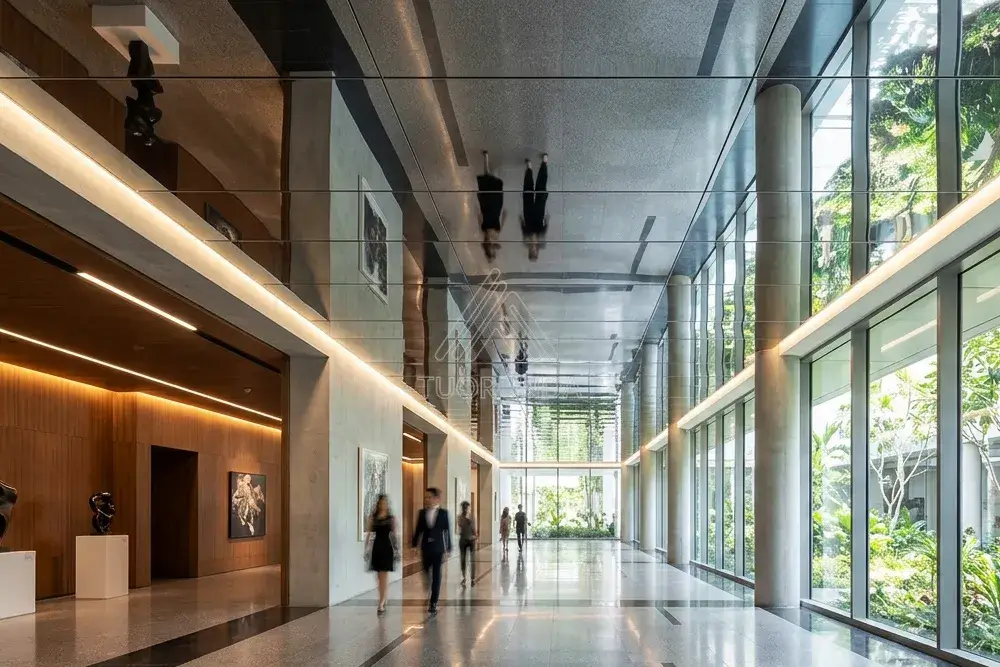
3. Mirror 8K: Ultra-smooth reflective finish. Used for luxury decorative ceilings in lobbies and elevators. Anti-fingerprint coating is recommended.
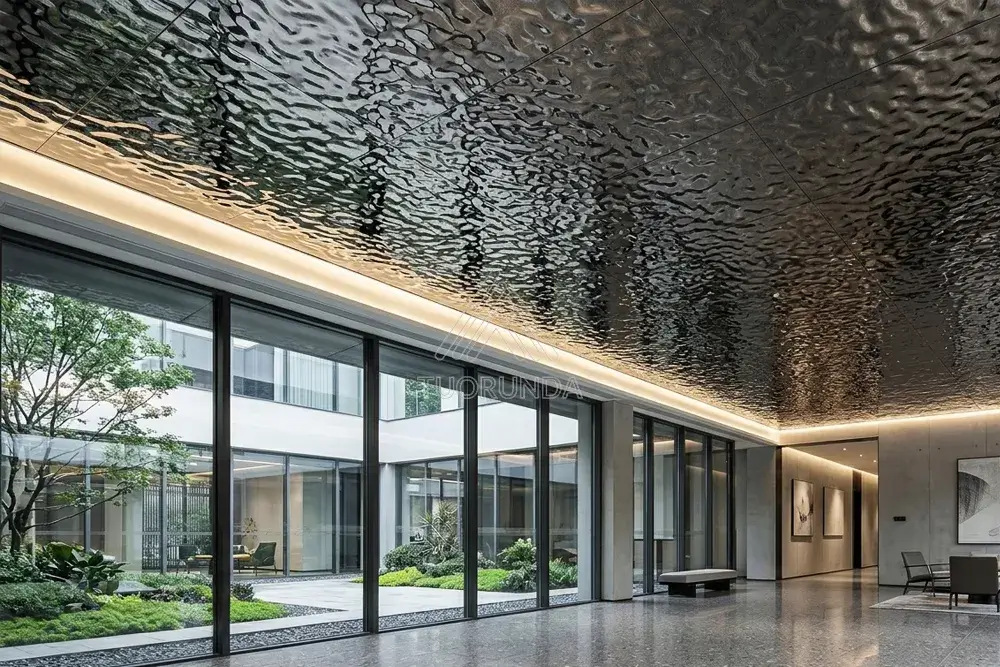
4. Water ripple / Embossed texture: Three-dimensional, fluid textured designs for decorative interiors.
5. PVD coated color: Used for decorative ceilings in various colors including gold, champagne, bronze and black titanium.
Key Benefits of Stainless Steel Ceiling Panels
When you look at ceiling materials stainless steel ceiling panels stand out. They offer advantages for tough commercial and industrial jobs.
Excellent Fire Safety Performance
Stainless steel is a Class A -combustible material. That means it won’t catch fire. It also won’t give off smoke when exposed to heat. This is a plus for places like public buildings, hospital corridors, hotels or anywhere safety rules are strict. For projects that need fire protection stainless steel ceiling panels offer solid passive fire safety.
Superior Moisture & Corrosion Resistance
Gypsum or wood ceilings often sag, rot or grow mould in areas. Stainless steel ceiling panels don’t have that problem. They hold up well in humidity or places with regular steam like commercial kitchens, laundries or indoor swimming pools. If you pick the stainless steel grade it can even handle salty air and mild chemicals without breaking down.
Hygienic & Easy to Clean
Stainless steel has a non-porous surface. That means bacteria, dust and grease can’t get trapped in it. You can wipe it down regularly with disinfectants and it won’t get damaged. This is why it’s perfect for places like food factories, hospital rooms or cleanrooms in plants. Places where cleanliness is top priority.
Long Service Life & Low Maintenance
Stainless steel ceiling panels are tough. They resist impacts, stains and wear. With basic cleaning they can look good for decades. Sure they might cost upfront than gypsum or mineral fibre ceilings.. Over time they save money. You won’t need to replace or fix them often. The total cost over their lifetime is much lower.
Flexible Aesthetic & Customization
Tuorunda can make stainless steel ceiling panels in any size, shape or with custom cutouts. We can pre- holes for downlights, fire sprinklers, air vents and smoke detectors. We also offer panels for special architectural designs. Whether you want an industrial look or something fancy and decorative stainless steel ceiling panels can fit your vision.
Recyclable & Sustainable
Stainless steel is 100% recyclable. When you recycle it the material doesn’t lose its strength or quality. Using stainless steel ceiling panels helps projects earn building certifications and supports ESG goals. It’s a eco-friendly choice, for modern construction.
Typical Applications of Stainless Steel Ceiling Panels
The versatility of stainless steel ceiling panels allows them to serve a broad range of building types, split into these main project categories.
Commercial Hospitality Projects
It’s common to see decorative stainless steel ceiling panels in hotel lobbies, elevators, restaurants, and bars. Stainless steel ceilings are often used by architects to create a luxury effect in entrance and public zones.
Food & Beverage/ Industrial Spaces
Food and beverage production, and processing factories, as well as butcher shops, require ceilings that are steam-proof and hygienic. Stainless steel ceilings meet those requirements and can be easily cleaned, and won’t build up grease.
Healthcare/ Cleanroom Projects
Ceiling surfaces in healthcare and medical facilities, and in pharmaceutical cleanrooms, require surfaces that are dust-free, and can be sanitized. Stainless steel ceilings can be repeatedly sanitized, and won’t allow microbial growth.
Public High-Traffic Buildings
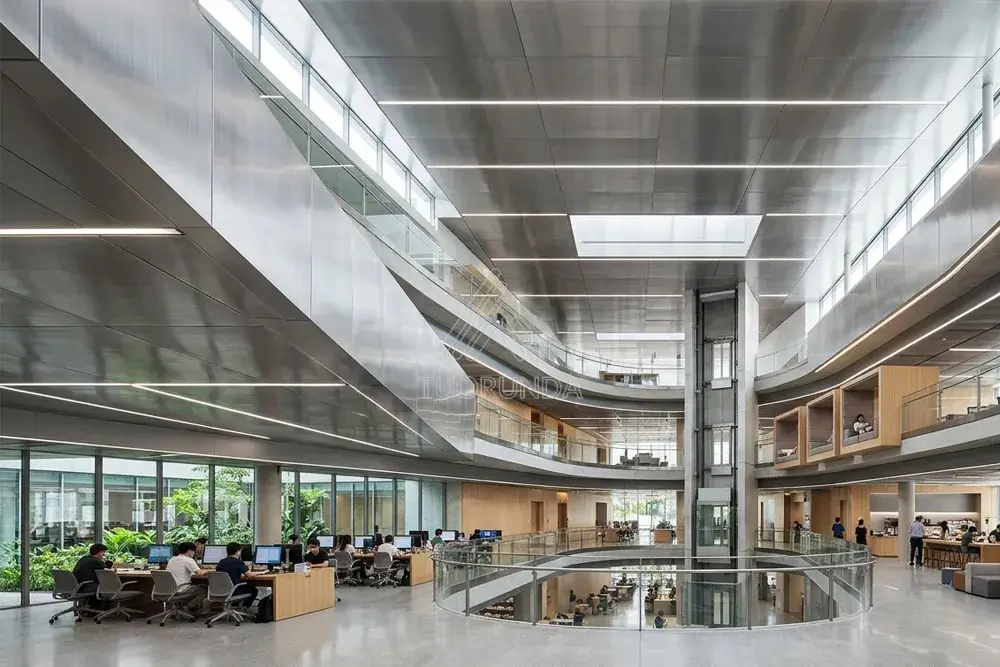
High public traffic buildings and facilities require materials that are tough, and can withstand abrasion, such as ceilings in shopping malls, museums, exhibition halls, airports, and metro/subway stations. Stainless steel ceilings fit those requirements and won’t show public use wear.
Marine & Coastal Projects
Coastal public facilities and buildings must be designed to protect against the negative effects of the marine environment. For ceilings in these facilities, 316L stainless steel ceiling panels should be used to provide protection against corrosion.
Stainless Steel Ceiling Panels vs Conventional Ceiling Materials
| Material | Moisture Resistance | Fire Rating | Lifespan | Hygiene | Aesthetic | Total Ownership Cost |
|---|---|---|---|---|---|---|
| Stainless Steel Ceiling Panels | Excellent | Class A | 20+ years | Excellent | Wide custom options | High upfront, low long-term |
| Gypsum Board | Poor, mould easily | Limited | 5–10 years | Poor, porous | Basic | Low upfront, high maintenance/replacement |
| Mineral Fibre Tiles | Fair, stains easily | Limited | 5–12 years | Poor, absorbs dust | Basic | Low upfront, regular replacement |
| Aluminum Ceiling Panels | Good | Class A | 15–25 years | Good | Moderate custom | Medium upfront |
For normal dry office spaces, gypsum or mineral fibre tiles may be sufficient. But when your project needs moisture resistance, high hygiene, fire safety or premium decorative effects, stainless steel ceiling panels become the stronger option.
Things to Consider When Buying Stainless Steel Ceiling Panels
Before placing an order, work through these key selection points to avoid costly mistakes during installation.
Select The Right Material Grade Based On Project Environment
Always match grade to the site environment. Dry indoor decorative projects can use 201; most general commercial indoor projects use 304. Any location with salt spray, constant steam or chemical exposure must use 316 or 316L.
Choose Suitable Surface Finish
Mirror surfaces and water ripple decorative surfaces often show fingerprints. Tuorunda strongly recommends adding an anti‑fingerprint coating to Mirror and water ripple finishes. The anti‑fingerprint coating will cut down on cleaning work. Keep the look fresh. Brushed hairline is a low‑maintenance option for industrial and public transit projects.
Panel Thickness, Size & Custom Cutouts
Panel thickness and dimensions should be planned with your architect. Panel thickness and dimensions need drawings that include cutouts for lights, sprinklers and air grilles. Curved forming also needs advance confirmation. Send your drawings to Tuorunda for technical review.
Matching Suspended Ceiling Keel System
Stainless steel panels are heavier than mineral fibre or aluminium ceiling tiles. Stainless steel panels require you to verify the load capacity of your suspended keel and hanging system before installation. Tuorunda can supply stainless steel ceiling panels plus matching accessories and professional engineering advice, for your installation team.
FAQ
Q1: Are stainless steel ceiling panels heavy?
Stainless steel ceiling panels are heavier than aluminium ones.. If you choose thin-gauge solid stainless steel panels they can still fit into standard metal suspended keel systems. Honeycomb stainless steel panels are an option. They’re more rigid and lighter which helps with big ceiling projects. Always check the keel’s load limit with your engineer before installing.
Q2: Can perforated stainless steel ceiling panels improve acoustics?
Yes they can. When you pair perforated stainless steel panels with backing they help absorb sound and cut down on echoes. This setup works well in places like auditoriums meeting rooms, subway stations and big open halls where clear sound matters.
Q3: How to clean and maintain stainless steel ceiling panels?
For cleaning use a soft cloth and a mild neutral cleaner. Stay away from scrubbers or steel wool. They can leave scratches. Panels with mirror or water ripple finishes and anti-fingerprint coating are easier to keep clean. If you have steel in kitchens clean grease spots often to stop buildup over time.
Q4: What is the MOQ for custom stainless steel ceiling panels from Tuorunda?
Tuorunda takes custom orders, for stainless steel ceiling panels. The minimum order quantity changes based on panel size, finish and any special processing needed. We also offer samples for you to test before an order. Reach out to our sales team to get MOQ details, sample pricing and how long your project will take.
Conclusion
I believe stainless steel ceiling panels are a modular metal ceiling solution thats used in commercial and industrial building projects. Stainless steel ceiling panels offer fire safety, protection from moisture and corrosion excellent hygiene, a long life span and the ability to be customized in different ways.
Choosing the grade is the most important step in a successful installation. Stainless steel ceiling panels in grade 201 are best for purposes. Stainless steel ceiling panels in grade 304 are best for indoor projects. Stainless steel ceiling panels in grade 316 or 316L are best for food areas and cleanroom environments. Stainless steel ceiling panels can have surface finishes that include brushed texture, luxurious mirror finishes and water ripple effects.
If you are an architect, a contractor or a project owner looking for stainless steel ceiling panels for your project Tuorunda is ready to help with your project. Contact the Tuorunda team today to get drawings, product samples and a custom quote, for stainless steel ceiling panels.
